Designing First-Week Onboarding for a Personal-Aroma Subscriber
Hook the product to a moment someone already does daily, or watch them cancel by week two.
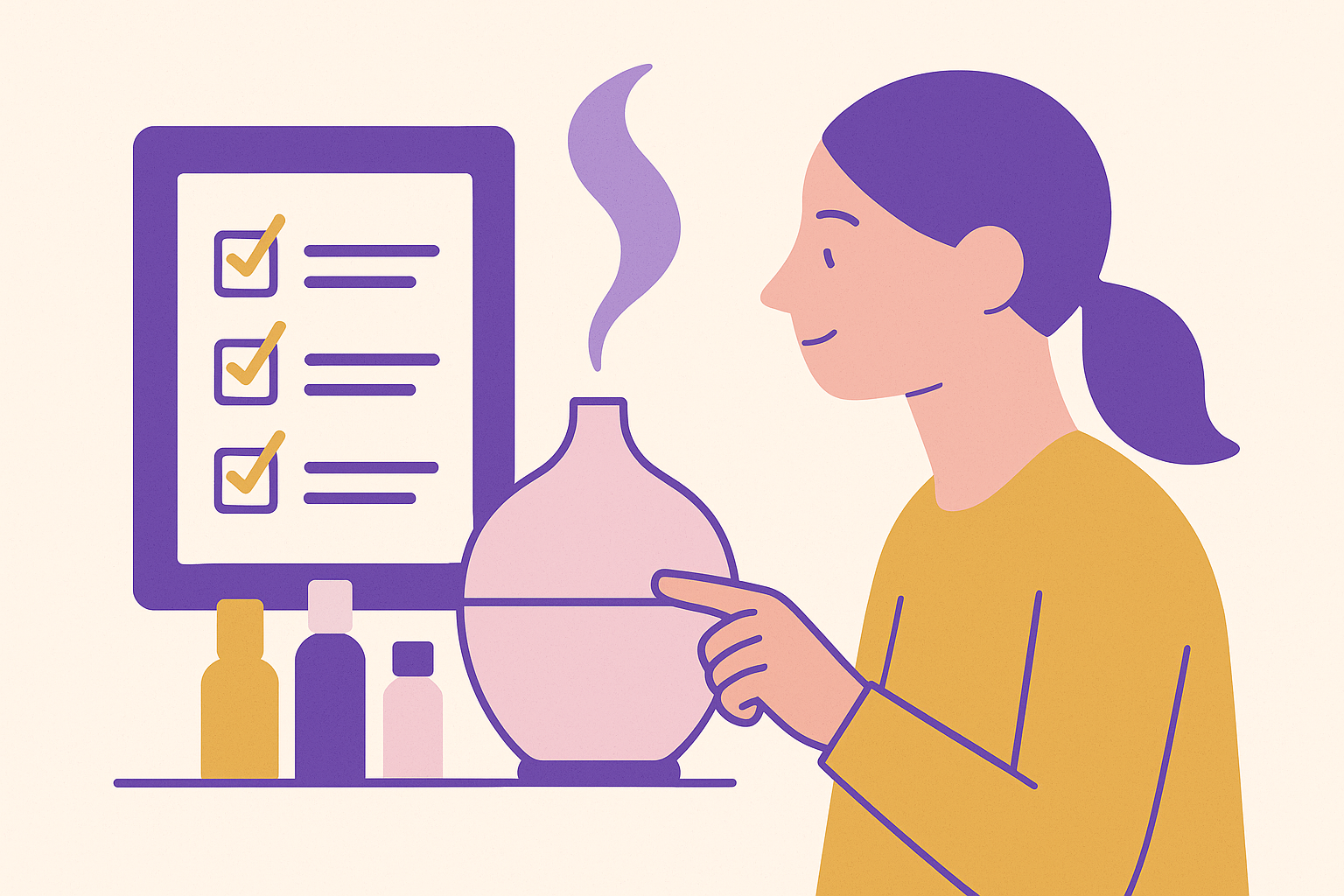
The first week of a scent subscription decides the outcome. Attach the product to a moment someone already lives through daily, and month two mostly takes care of itself. Fail to make that attachment, and the product becomes a charge on a bank statement, waiting to get flagged. I've watched this pattern often enough to say it plainly: most churn in this category is a filing problem, because the subscriber's brain never filed the thing as routine.
Scent doesn't create behavior, it rides on it
Meal kits ask you to cook. Skincare asks you to add a step to a routine you already run. Scent asks for something stranger, wanting to graft itself onto a moment already happening in someone's day, without asking permission first. The shower, the commute, the 9 a.m. slump at the desk, the couch at 9 p.m. with a glass of wine and the TV running in the background: none of these need to be sold to anyone. They're already there.
If onboarding never figures out which moment the product is supposed to attach to, the subscriber has to build a habit out of nothing, and that's a brutal ask. This is a big part of why so many consumables companies bleed subscribers in the first sixty days. B.J. Fogg's behavior model breaks habit formation into three parts: prompt, ability, motivation. Scent subscriptions rarely have a motivation problem, since people like smelling good, and they like their homes smelling like something other than yesterday's takeout containers. The struggle is almost entirely about the prompt, and hardly anyone designs for it on purpose.
So ask, before anything else, in the very first session: what were you doing before you had this? Lighting a candle when guests came over? Spritzing perfume after a shower, half without thinking about it? Or nothing, just walking into a stale apartment most evenings and wishing, vaguely, it smelled like something else?
That answer reshapes the entire onboarding sequence. A subscriber who used to light candles already has a cue, evening, winding down, usually alone, and the product just needs to slide into a slot that already exists. Someone with no ritual at all needs one built from scratch, which takes longer and breaks more easily under the smallest disruption. This needs to be framed honestly, or the subscriber expects week-one magic and quits when it doesn't show.
Stop checking in on the calendar. Check in on the behavior.
Day 1, day 7, day 30 is how most onboarding sequences get scheduled. It's administratively tidy and behaviorally almost meaningless. Lally and colleagues' 2010 habit-formation study found the runway to automaticity varies wildly by person and by how simple the behavior actually is; some subjects hit it in 18 days, others needed more than 250. One finding does hold up cleanly across the data, though: early attempts carry outsized weight, because that window is where the whole thing is most likely to fall apart.
For scent, the checkpoints that matter aren't dates. They're moments: first use, first re-use, first lapse.
First use needs a check-in inside 24 to 48 hours. A short nudge does the job, asking what time someone used it and what they were doing right before. That single answer tells you whether the cue-pairing took, or whether the box is sitting unopened on a shelf.
First re-use matters more than first use. Someone who tries a diffuser refill once and doesn't touch it again for ten days hasn't formed anything, no matter how good that first session felt. The check-in here should dig at friction: was it inconvenient, did they forget, or did the scent not match the moment they hoped it would fill. Timing shifts by format too, and treating every format the same is a mistake I've watched more than one team make. A wearable solid gets re-used fast, since the cue sits right on the body, while a room diffuser has a longer, looser runway.
First lapse is the checkpoint almost every company skips, and it's the most valuable of the three. Somebody forgets. Travel throws off a routine, or a schedule shift buries the habit for a week, and what happens next decides everything. Does the lapse feel like failure, or does it feel like just another Tuesday? A message that reads "missed a day, totally normal, here's how to jump back in" does more retention work than five polished marketing emails combined.
The month-two cliff, and why it's mostly a math error
Month two is where these subscriptions tend to snap, and the mechanism is nearly always the same: refill timing that doesn't match how fast people actually use the product. Thirty days is a clean number on a spreadsheet, but it's arbitrary against real behavior. If someone's actual usage rate is three nights a week instead of every night, the second shipment lands while the first bottle's still half full. A stockpile sits on the counter with zero urgency attached, and every reason exists to pause or cancel before the third charge hits.
The fix is individualized cadence, built off early usage signals rather than a shipping calendar locked in during a pricing meeting six months before launch. If the day-7 or day-10 check-in shows someone using the product two or three times a week, stretch the refill clock to match. Dollar Shave Club solved a version of this years ago with razors, letting subscribers set their own shipment frequency instead of forcing everyone into the same fixed box. That flexibility alone kills off "I have too much of this," a top cancellation reason across recurring-consumable categories generally, not just scent.
Companies that get this right build the refill algorithm off week-one behavior. Companies that get it wrong are still arguing about it in a Q1 spreadsheet nobody's touched since.
What pause actually does
Give people an easy pause option instead of a binary keep-or-cancel decision, and more of them stick around long enough to actually form the habit. This cuts against instinct, since conventional wisdom says friction-free cancellation kills a subscription business. In practice, pause behaves more like a pressure valve than an exit ramp.
Somebody's overwhelmed by a stockpile, or headed on a two-week trip, or just not ready to commit fully yet, and pause hands them a third option besides quitting outright. A real share of paused subscribers come back once the backlog clears or the routine resets on its own.
Operators across the consumables space have watched this pattern repeat. Cancellation usually happens under acute frustration: a delivery glitch, an unwanted pile of product, one too many "did you enjoy your box?" emails clogging an inbox that's already full. Pause lets that frustration cool without torching the relationship, and it costs almost nothing to build relative to everything else on this list.
Building a ritual for someone who's never had one
The hardest subscriber to onboard has no scent habit at all. No candle to replace, no perfume routine waiting for a substitute. For this person, onboarding has to manufacture a cue, and manufacturing requires being blunt instead of hoping the subscriber stumbles onto a routine through vague suggestion.
The move that works: tie the product to something already automatic in the day, something they'd do with or without the subscription, like making coffee, walking in the front door, or closing the laptop at 6 p.m. This is habit-stacking, the term James Clear popularized in Atomic Habits, where a new behavior rides piggyback on an existing automatic one instead of standing up on its own. "Use this the second you walk in, before you even set your bag down" does real work. "Enjoy your new scent!" does none.
The tradeoff, stated honestly
None of this comes free. Individualized refill cadence, behavior-triggered check-ins, pause infrastructure, all of it costs more to build than a fixed 30-day subscribe-and-save flow with a form-letter welcome email. Smaller operators feel that cost harder than companies with the engineering headcount to build adaptive logic on day one. That's a resourcing constraint, and it's worth naming plainly rather than dressing up as strategy.
There's an alternative, though: a churn curve that spikes right when the first post-trial invoice hits, which is about the most expensive failure mode a subscription business can run into. It means paying full acquisition cost for a customer who never got far enough into the loop to want to stay. The first week isn't a warm-up. It's the mechanism deciding, quietly, whether there's a second month at all.